

Consult

Consult

AI Service
Case Study on Temperature and Humidity Monitoring in Cold Chain Cold Storage
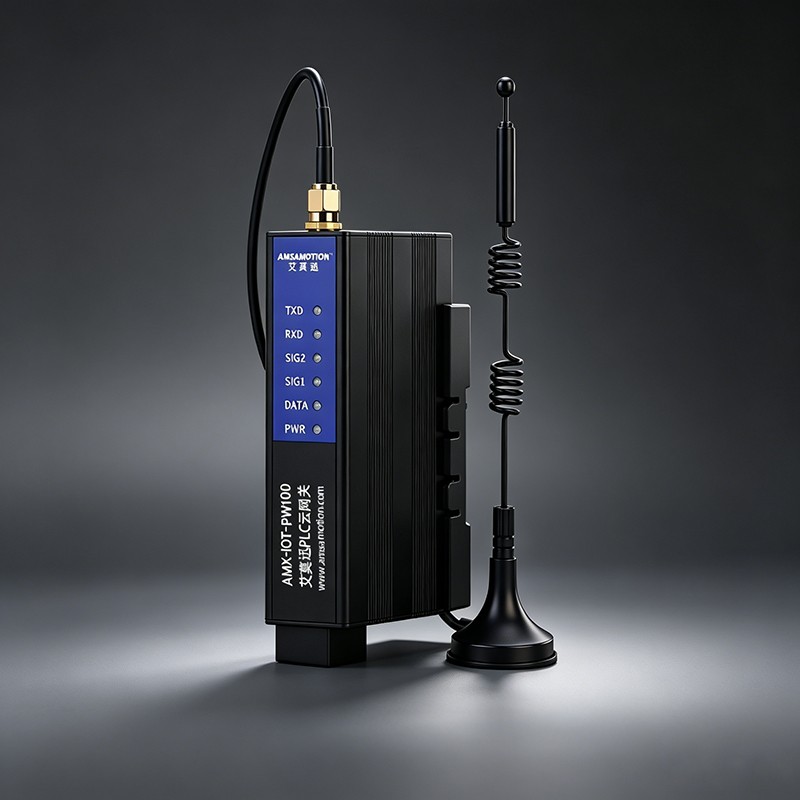
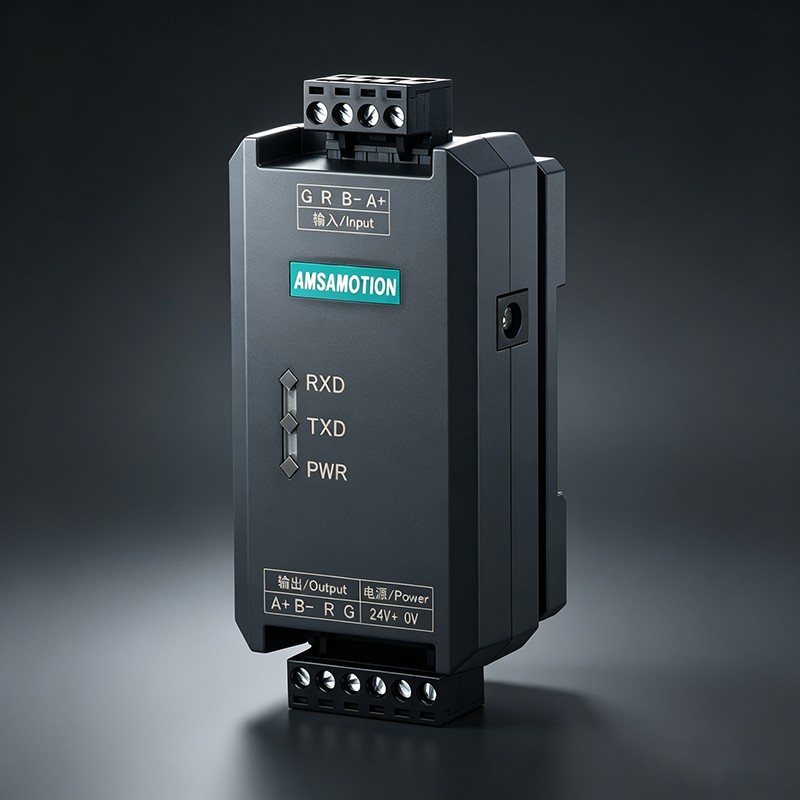
Core device: AMX-DTU-G200
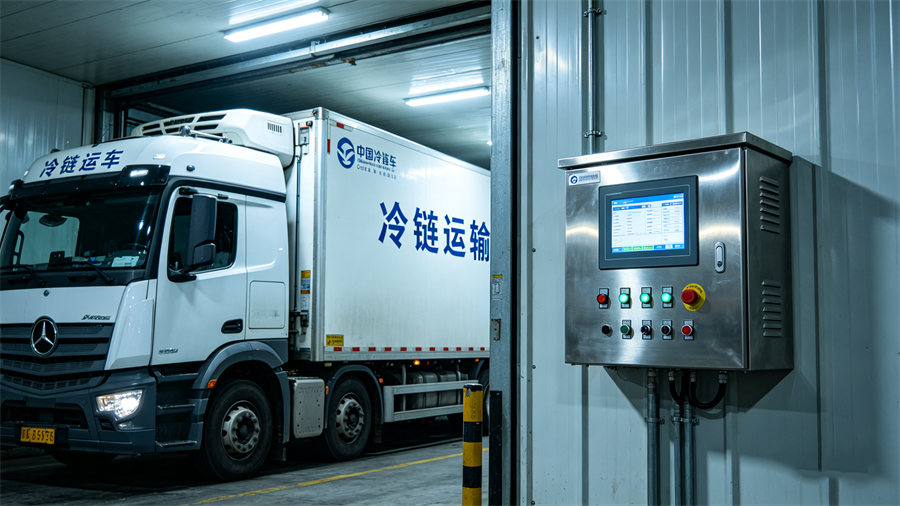
Today, for friends involved in cold chain, cold storage, and fresh food warehousing, I'd like to share a low-cost, offline, and easy-to-manage wireless monitoring solution for temperature and humidity!
I have seen too many real situations: cold storage facilities are scattered across several parks, and the administrators have to drive around to inspect them one by one every day. They are exposed to the sun in summer and the cold in winter, and are exhausted after a long day. They often miss or make mistakes in their records. What's even more worrying is that cold chain vehicles are scattered all over the place, and the temperature in the vehicles may quietly exceed the limit. By the time it is discovered, the ingredients have already gone bad, and it is common for a single order to incur losses of tens of thousands of yuan. Want to install wires? The walls of the cold storage facilities are thick and have insulation layers, so it is impossible to drill holes and damage them; vehicle movement makes it impossible to install wires. Traditional equipment can only be monitored on-site, and the central control room cannot manage them in a unified way. Data is not retained, so there is no basis for troubleshooting, and responsibilities cannot be clearly defined.
Actually, the problem is quite easy to solve: replace wired with wireless, allowing data to transmit to the central control room automatically. No wiring is needed, no damage to the site, no complicated configuration, and the device can be used as soon as it is powered on.
Today, I will share with you a real-life solution we helped our client implement - using the AMX-DTU-G200 industrial DTU to quickly set up a stable wireless monitoring system for temperature and humidity.
First, let's figure out: how does this system actually work?
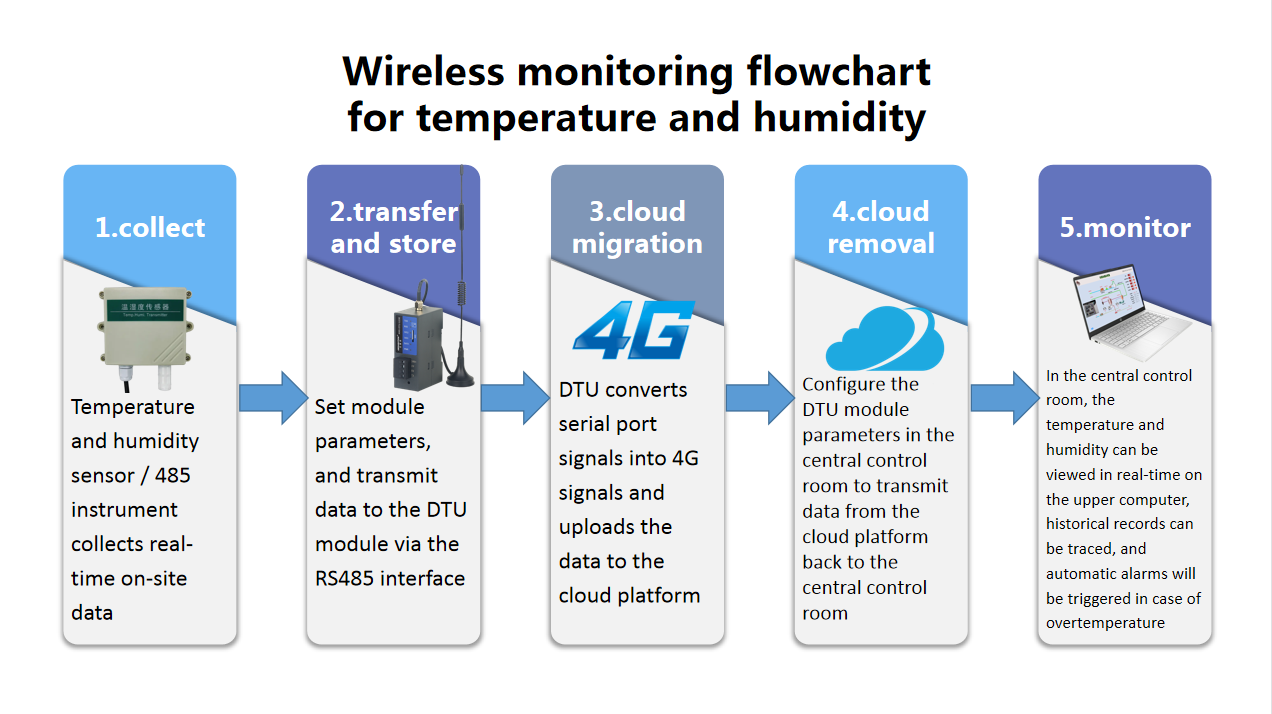
The working principle involves wireless transparent transmission of data, consisting of 5 steps:
1. Collection: Real-time collection of on-site data by temperature and humidity sensors/485 meters;
2. Transfer: Set module parameters, and the data is transmitted to the DTU module through the RS485 interface;
3. Cloud upload: DTU converts serial port signals into 4G signals and uploads the data to the cloud platform;
4. Downloading to the cloud: Connect a DTU module of the same model to the upper computer in the central control room, configure the parameters, and transmit data from the cloud platform back to the central control room;
5. Monitoring: Real-time monitoring of temperature and humidity can be conducted on the upper computer in the central control room, with historical data traceability and automatic alarms for overtemperature.
After extensive testing on numerous projects, we have concluded that this DTU is highly suitable for cold chain scenarios.
This DTU is designed for industrial use, capable of stable operation within a temperature range of -15~65℃. With wide voltage supply, built-in anti-reverse connection and hardware watchdog, it is not afraid of low temperatures in cold storage or vibrations in vehicle compartments. It supports 4G full network connectivity, comes with a SIM card pre-installed, and offers 3G data allowance for the first year, eliminating the need to purchase an additional card. Most practically, it supports one-to-many forwarding, allowing one device to manage up to 8 devices, making it particularly suitable for multi-point centralized data collection.
Here are two real-life cases that I have successfully implemented for my clients
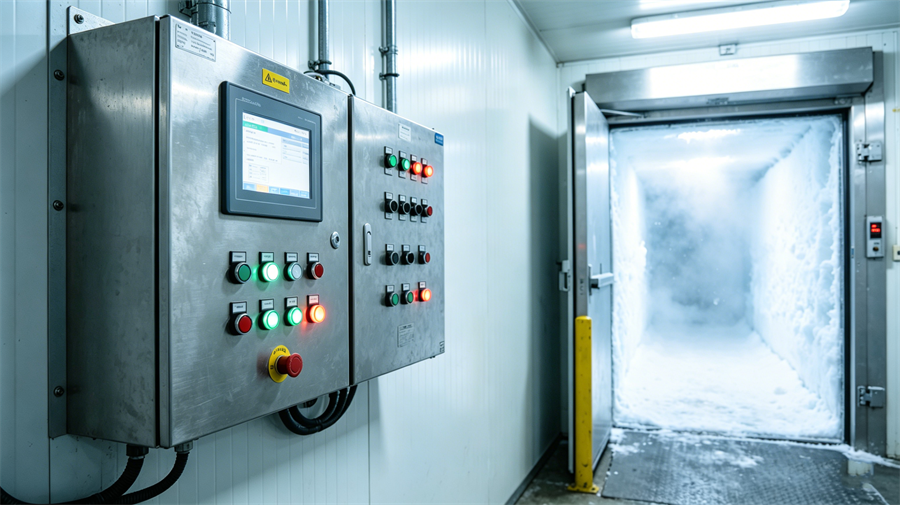
Case 1: Centralized monitoring of multiple cold storage facilities in urban areas
A fresh produce company has six cold storage facilities, located in different areas. Previously, they relied on manual meter reading in the morning and evening, which often led to errors. We connected the 485 temperature and humidity meters in each cold storage facility to the AMX-DTU-G200, connected the power supply, connected the 485 meters, and set the parameters in three steps. Now, the office computer can monitor the temperature of all cold storage facilities in real time. The customer said that now they don't have to visit the site every day, which saves a lot of labor, and there have been no more incidents of temperature overruns being reported.
Case 2: In-transit monitoring of cold chain vehicle fleet
A distribution company has over 20 cold chain vehicles, making it challenging to monitor temperature during long-distance transportation. We have installed DTUs and temperature and humidity sensors on each vehicle, ensuring real-time data transmission to the central control room via 4G. Drivers no longer need to stop and record data, as the entire process can be viewed, stored, and traced in the backend. Last month, a vehicle door was not properly closed, leading to abnormal temperature. The platform alerted us within 30 seconds, allowing for timely intervention and preventing the entire vehicle's food materials from being scrapped.
The actual value brought by this set of solutions
1. Cost savings: No wiring, no wall breaking, no complex construction, with costs directly reduced by half;
2. Manpower saving: Eliminate manual meter reading, reducing 80% of on-site visits;
3. Real-time and efficient: One-to-many transmission, with multiple devices involved, data can be viewed in real-time, enabling early detection of faults.
Summary: In the cold chain and cold storage industry, maintaining temperature and humidity is key to maintaining profits. The AMX-DTU-G200, a simple and stable industrial DTU, does not rely on fancy concepts but effectively addresses the pain points of difficult wiring, monitoring, and management in dispersed locations. If you are also troubled by these issues, this solution can be directly adopted.