

Consult

Consult

AI Service
PLC Remote Operation & Maintenance and Production Line Monitoring Project for Auto Parts Workshop
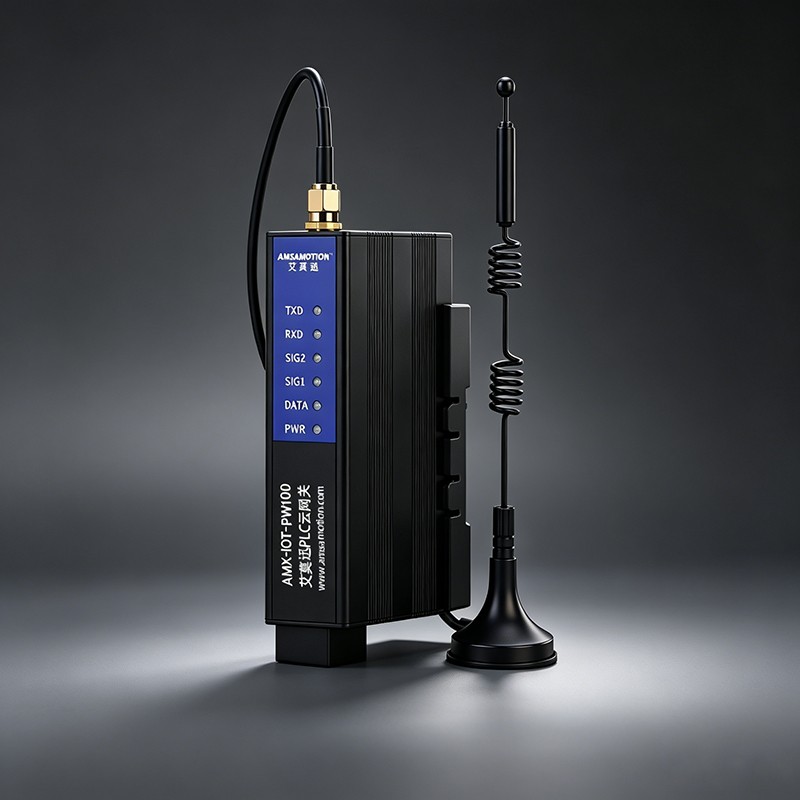
Core Equipment: AMSAMOTION AMX-IOT-PG600S Gateway
I. Customer Pain Points: Operation & Maintenance Dilemma of Multi-Workshop & Multi-Brand PLCs
Project Background
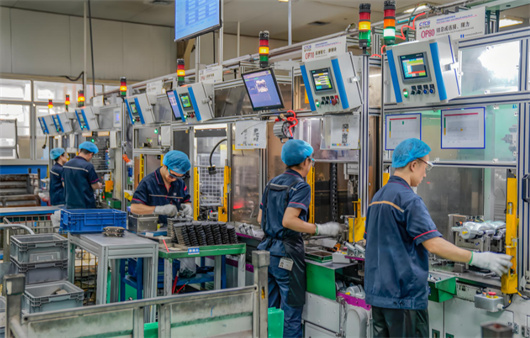
An auto parts company in Xiangtan, Hunan Province specializes in automotive lamp components and supplies multiple automakers. The factory’s assembly workshops were built in early stages, equipped with various PLC brands including Siemens S7-1200/1500, Mitsubishi FX5U, Omron CJ2M, etc.
Core Pain Points
1. Time-consuming cross-workshop debugging
Workshops are far apart with incompatible PLC protocols. Engineers must carry laptops and rush between workshops, walking over 20,000 steps per day. For night-shift breakdowns, it takes at least 40 minutes to reach the factory, causing downtime losses of thousands of yuan per incident.
2. Scattered production data without aggregation
Production output, cycle time, equipment availability and other data are isolated in local PLCs. Management cannot view real-time production progress. Daily reports rely on manual records, leading to one-day lag and frequent errors.
3. Fault detection fully dependent on manual monitoring
Equipment anomalies rely only on on-site alarms and patrol inspection. A welding robot once triggered frequent low-air-pressure alarms that were not detected in time, causing a large batch of poor solder joints and rework losses of tens of thousands of yuan.
4. Extra IO modules required for simple control
Simple actuators such as bin gates, indicator lights and buzzers need additional distributed IO modules, increasing hardware cost and wiring complexity.
II. Solution: AMSAMOTION PG600S “Collection-Control-Connection” Integrated Solution
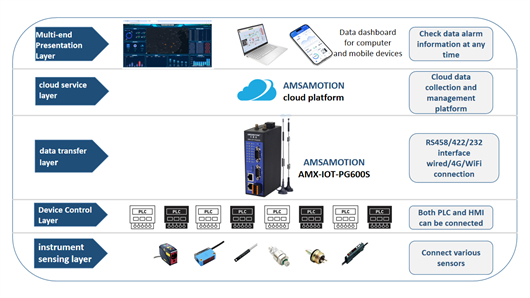
The factory deploys one Aimoxun PG600S gateway per production line. The gateway connects multi-brand PLCs via dual Ethernet ports/serial ports, supports flexible networking (4G/WiFi/wired), and unifies access to the Aimoxun Cloud Platform, realizing integrated remote O&M and production line monitoring.
System architecture is shown below:
III. Application Scenarios
1. Engineer remote PLC debugging at home
During weekend night shift, the Mitsubishi PLC program for headlight assembly line required modification after model change. The engineer connected to the on-site PLC directly via the cloud platform’s virtual Ethernet bridging function, uploaded the revised program and monitored status. The whole debugging took only 30 minutes without going to the factory, and the line resumed on time.
2. Automatic data retransmission after network disconnection
The taillight assembly line lost network for 3 hours due to switch failure. The PG600S gateway automatically stored stamping counts, equipment status and fault codes to the local SD card. After network recovery, all missing data was retransmitted to the cloud, keeping the production curve complete without gaps.
3. Real-time production line status via mobile phone
The workshop supervisor checked real-time output, cycle rate and equipment status via the cloud configuration interface on a mobile app during a business trip. Upon finding slow cycle time, he coordinated adjustments immediately to ensure on-time delivery.
4. Built-in IO eliminates extra modules
The bin gate at the aging test line originally needed an extra IO module. PG600S uses its 4-input 4-output built-in IO to connect limit sensors and solenoid valves directly, realizing automatic gate control via cloud logic linkage.
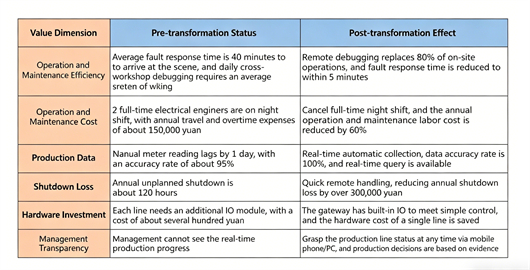
IV. Solution Value
V. Conclusion
By deploying the AMSAMOTION PG600S industrial gateway, the auto parts company has achieved unified remote operation and maintenance for multi-brand PLCs and real-time production line data monitoring with a lightweight investment of one unit per production line.
This project has not only significantly reduced unnecessary travel for engineers and losses caused by unexpected downtime, but also transformed production management from experience-driven to data-driven, laying a solid foundation for the factory’s digital upgrading.