

Consult

Consult

AI Service
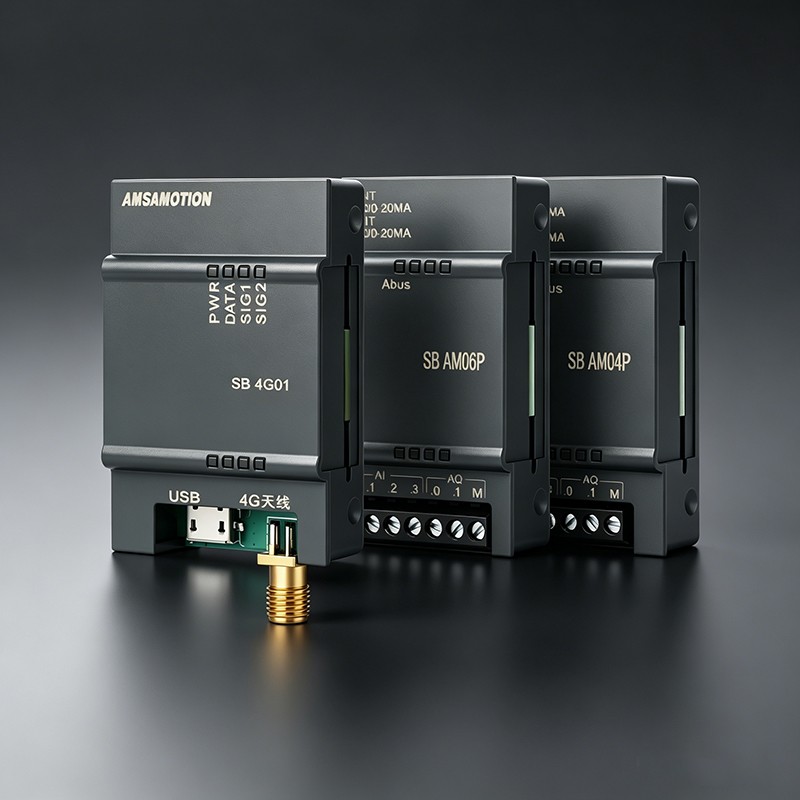
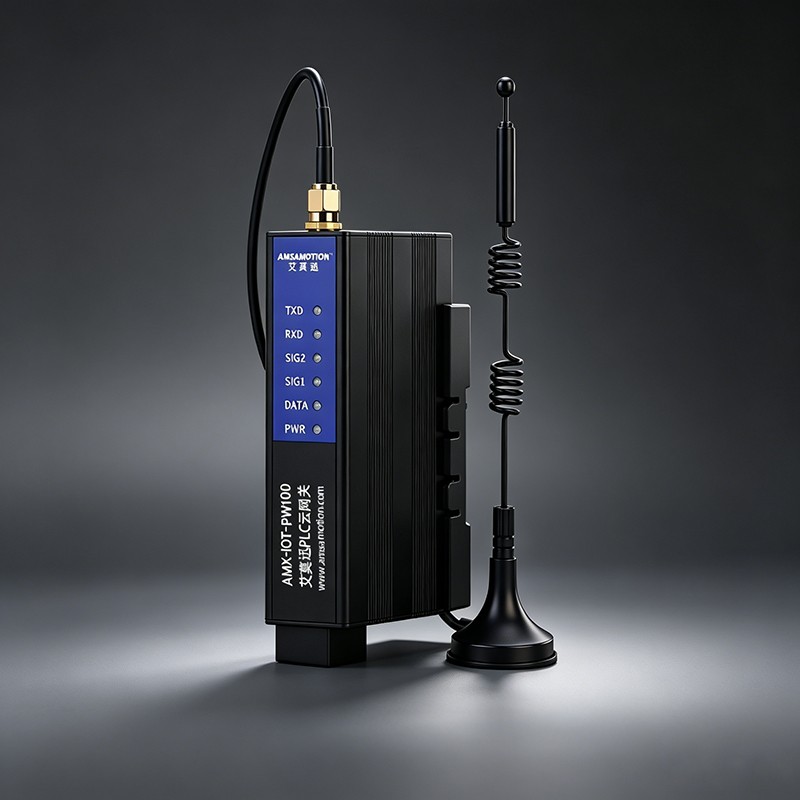
Core Equipment: AMSAMOTION AMX-IOT-PG600S Gateway + 4G Wireless IO
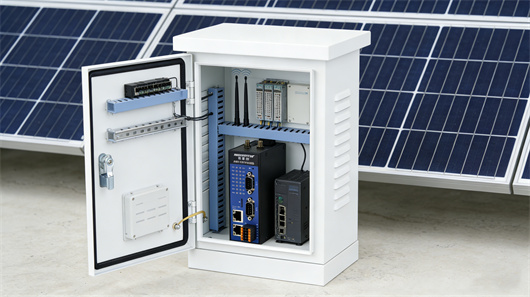
To support the “Dual Carbon” goals, a municipal water group in Yunnan built distributed photovoltaic (PV) power stations with a total installed capacity of approximately 4.2 MW on rooftops and vacant land of 7 water plants and 3 sewage treatment plants. The stations adopt “self-consumption first, surplus power to grid” to reduce on-site electricity costs.
1.Dispersed sites, unattended operation
10 sites are scattered across urban areas, development zones and towns, dozens of kilometers apart. No dedicated PV O&M staff are available; inspections rely on part-time electricians on duty with insufficient professional skills.
2.Mixed equipment brands, isolated data
The PV project was constructed in two phases: Phase 1 used Huawei inverters, while Phase 2 adopted GoodWe, Growatt and other brands to control costs. Each inverter uses an independent monitoring APP. Headquarters cannot view power generation in a unified manner and must switch accounts repeatedly, resulting in very low efficiency.
3.Unstable network conditions
Rural water plants lack fixed broadband. 4G signals are severely attenuated inside steel-structured rooftops and power distribution rooms, causing frequent data interruptions. Once, a communication outage caused headquarters to miss an inverter shutdown, leading to zero power generation for 3 consecutive days and thousands of kWh lost.
4.Delayed fault response
Inverter alarms are only visible in the manufacturer’s APP, which duty personnel are unfamiliar with. A low string insulation impedance alarm was left unaddressed and caused inverter burnout, with a repair cost of nearly 10,000 yuan.
5.No automatic data archiving
Monthly power generation data must be manually recorded for electricity settlement and subsidy calculation, leading to errors and poor traceability.
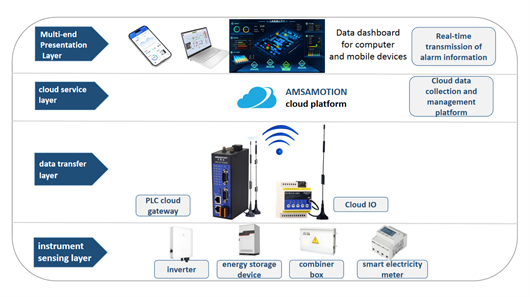
For the 10 small power stations, the group deployed one AMSAMOTION PG600S gateway and several cloud IO modules per station. All data are uploaded to the AMSAMOTION Cloud Platform via 4G, enabling remote centralized monitoring by the headquarters Energy Management Section.
System architecture is shown below:
1.One-screen overview of all power stations
Multi-brand inverters use incompatible protocols and previously required multiple APPs. PG600S gateway unifies data collection, displaying power generation of all 10 sites on one large screen for full visibility.
2.Data integrity even during network outages
4G signals at rural stations often drop out. The gateway automatically stores data to an SD card when offline and resubmits to the cloud after reconnection. Background reports remain complete, ensuring accurate monthly electricity settlement.
3.Remote reset and troubleshooting via mobile phone
When an inverter shut down due to voltage fluctuation, the supervisor received an alarm on his mobile phone, identified the cause via the mini-program, and restored grid connection with one “reset” click. The issue was resolved in 10 minutes without a site visit.
4.Data-guided power peak shifting
By comparing PV generation and plant electricity consumption reports, it was found that surplus green power was fed back to the grid at noon at low profit. The group adjusted water pump operating hours to consume more self-generated power, reducing purchased electricity costs.
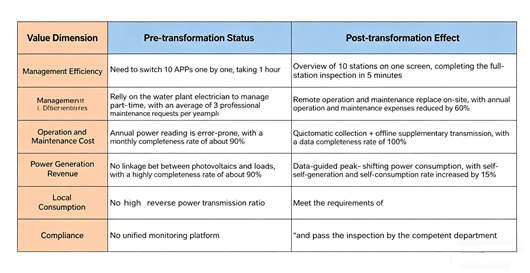
By deploying one AMSAMOTION PG600S gateway and several cloud IO modules at each station, the water group completed digital upgrading of 10 small PV stations with a 10,000-yuan level investment. The project realized centralized monitoring, remote O&M and automatic data archiving. It not only reduced operation and maintenance burdens but also optimized power dispatching with data, so that “green power” is efficiently utilized where it matters most.