

Consult

Consult

AI Service
No worries for online water quality monitoring, with DTU remote transmission
Core device: AMX-DTU-G600
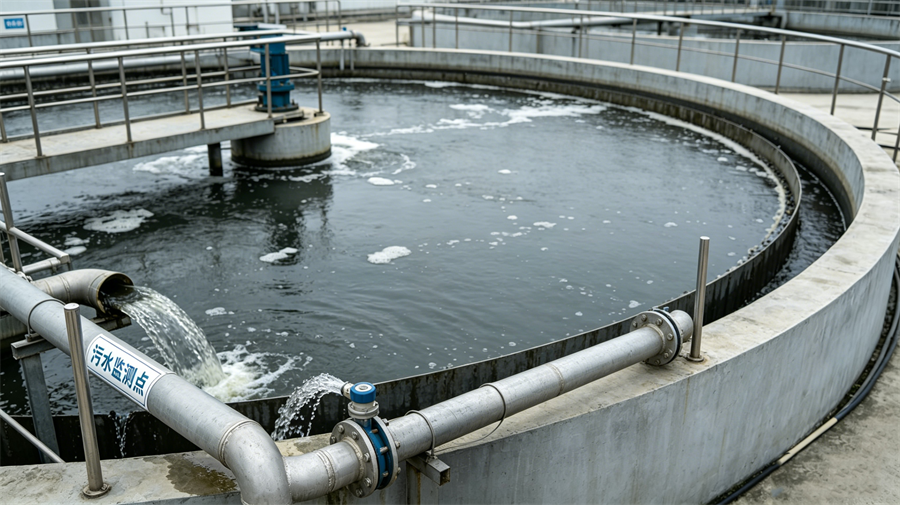
Those who are engaged in environmental protection and industrial pollution control know that while water quality online monitoring may seem simple, implementing it can be a headache. Today, based on real-world experience, I will discuss how to solve these troubles.
Let's first talk about the most common troublesome things we encounter:
The sewage outlets, rivers, and reservoirs are scattered and located in remote areas, making it costly and difficult to lay cables. Many locations are simply inaccessible for cable installation;
Manual inspection and sampling are slow, data is lagging behind, and it is difficult to catch illegal emissions and sudden pollution at night, and the data is prone to inaccuracy;
The equipment is placed in the wild, exposed to wind and sun, and the voltage is unstable, often causing crashes and offline issues, making maintenance a tiring task;
With multiple instruments and points, data cannot be uniformly uploaded to the platform, leading to chaotic management and difficult report preparation;
These pain points essentially boil down to one issue: data can be collected but not transmitted back, nor can it be maintained stably.
Today, I will share a practical solution that utilizes the AMX-DTU-G600 4G DTU to transform water quality meters into intelligent terminals that are "remote-enabled, network-connected, and centrally manageable".
Working principle and implementation steps:
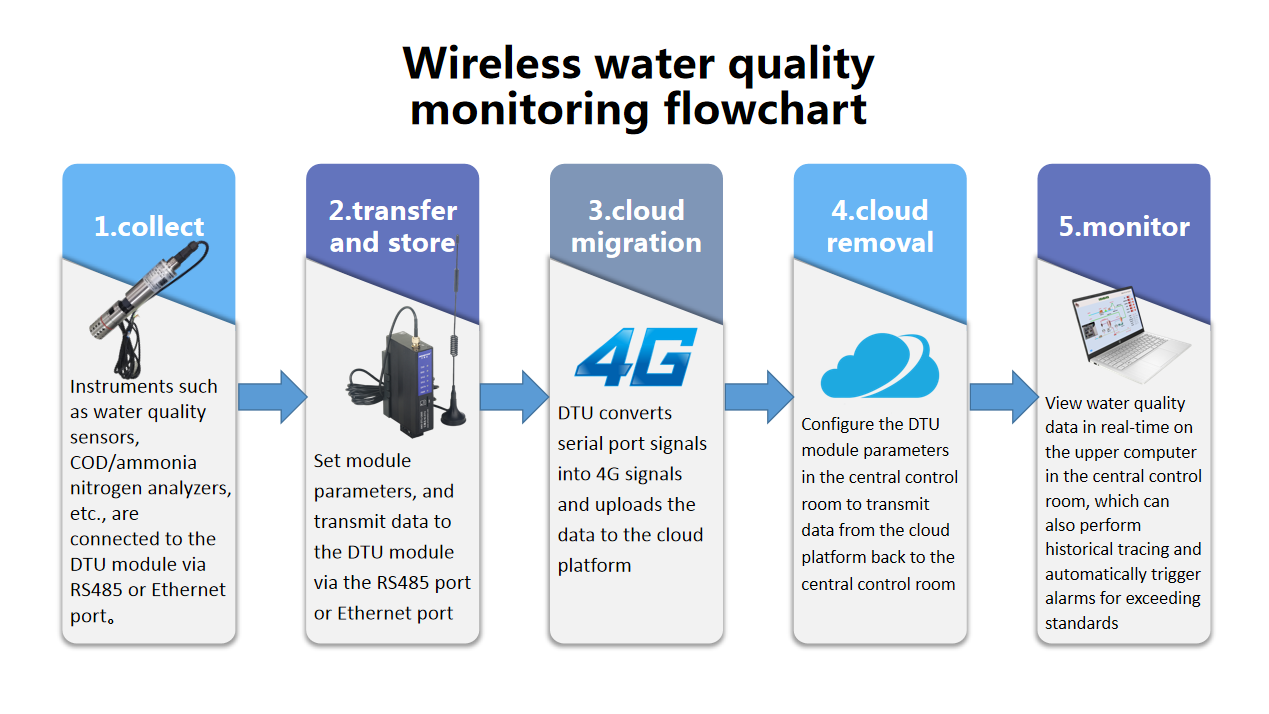
The working principle involves data transparent transmission, and the specific implementation steps are divided into 5 steps:
1. Collection: First, connect the on-site instruments such as water quality sensors, COD/ammonia nitrogen analyzers, etc., to the DTU module via RS485 or Ethernet port.
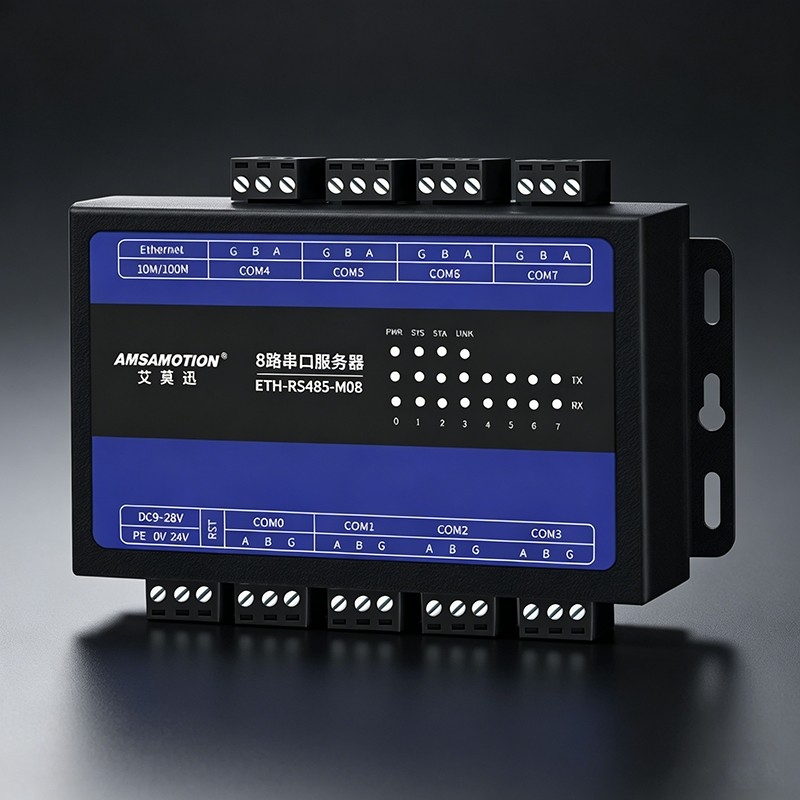
The DTU module supports one-to-eight data transparent transmission for RS485 serial ports and one-to-four data transparent transmission for Ethernet ports.
2. Transfer: Set module parameters, and transmit data to the DTU module via the RS485 port or Ethernet port;
3. Cloud upload: DTU converts serial port signals into 4G signals and uploads the data to the cloud platform;
4. Downloading to the cloud: Connect a DTU module of the same model to the upper computer in the central control room, configure the parameters, and transmit data from the cloud platform back to the central control room;
5. Monitoring: Real-time viewing of water quality data on the upper computer in the central control room, historical tracing capabilities, and automatic alarms for exceeding standards.
The entire process involves pure data transparent transmission, allowing operation and maintenance personnel to view real-time status data from the office. This DTU is designed for industrial use and supports 4G full-network Cat-1 connectivity. It operates within a wide temperature range of -20 to 65℃, withstanding exposure to sunlight and extreme cold. Additionally, it features electrostatic and pulse burst protection, meeting the requirements of harsh outdoor environments. Most importantly, it supports one-to-many forwarding, with one device capable of managing up to 8 devices, making it particularly suitable for multi-point centralized data collection.
Two real-life implementation cases
Case 1: Online monitoring of sewage discharge outlets in industrial parks
There are more than ten sewage outlets in a certain industrial park, scattered around the corners of the factory area, making it difficult to route and troublesome to maintain.
Each location is equipped with one AMX-DTU-G600, connected to pH, COD, and ammonia nitrogen meters, and the 4G data is directly uploaded to the environmental monitoring platform.
Effect:
No need to dig trenches or lay cables, complete the entire deployment in one week
24-hour real-time upload, immediate alarm from the over-standard upper computer, no place to hide for illegal emissions
By remotely viewing instrument status, operation and maintenance times are reduced by 70%, significantly reducing labor costs
Case 2: Automatic monitoring of water sources in river courses/reservoirs
Remote river sections and reservoirs lack electricity and internet connectivity, and traditional monitoring stations are costly and have limited coverage.
Using a combination of solar energy, DTU, and multi-parameter water quality probe, with AMX-DTU-G600 responsible for wireless transmission.
Effect:
Unattended stable operation, automatic reconnection after power and network recovery, no data loss
Real-time transmission of data such as water level, dissolved oxygen, and turbidity, with rapid early warning for anomalies
One platform manages the entire domain, significantly enhancing supervision efficiency
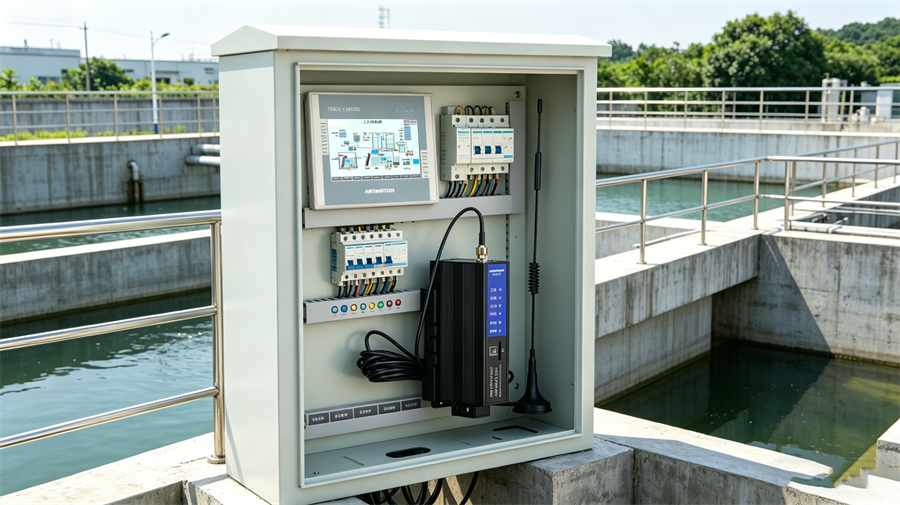
The real value brought by this solution
1. Cost-saving: No wiring required, less construction work, and less manual inspection
2. Stability: Industrial-grade stability, watchdog to prevent crashes, and no disconnection in the wild
3. Compliance: Real-time traceability of data to meet environmental supervision and inspection requirements
4. Efficiency: Centralized management across multiple points, rapid response to anomalies, and prevention of pollution expansion
In summary, the core of water quality online monitoring is not just about purchasing instruments, but also about transmitting data back to the platform stably, securely, and cost-effectively. Industrial DTUs like the AMX-DTU-G600 are practical tools that help bridge the "last mile", ensuring remote monitoring is truly implemented, effective, and hassle-free.